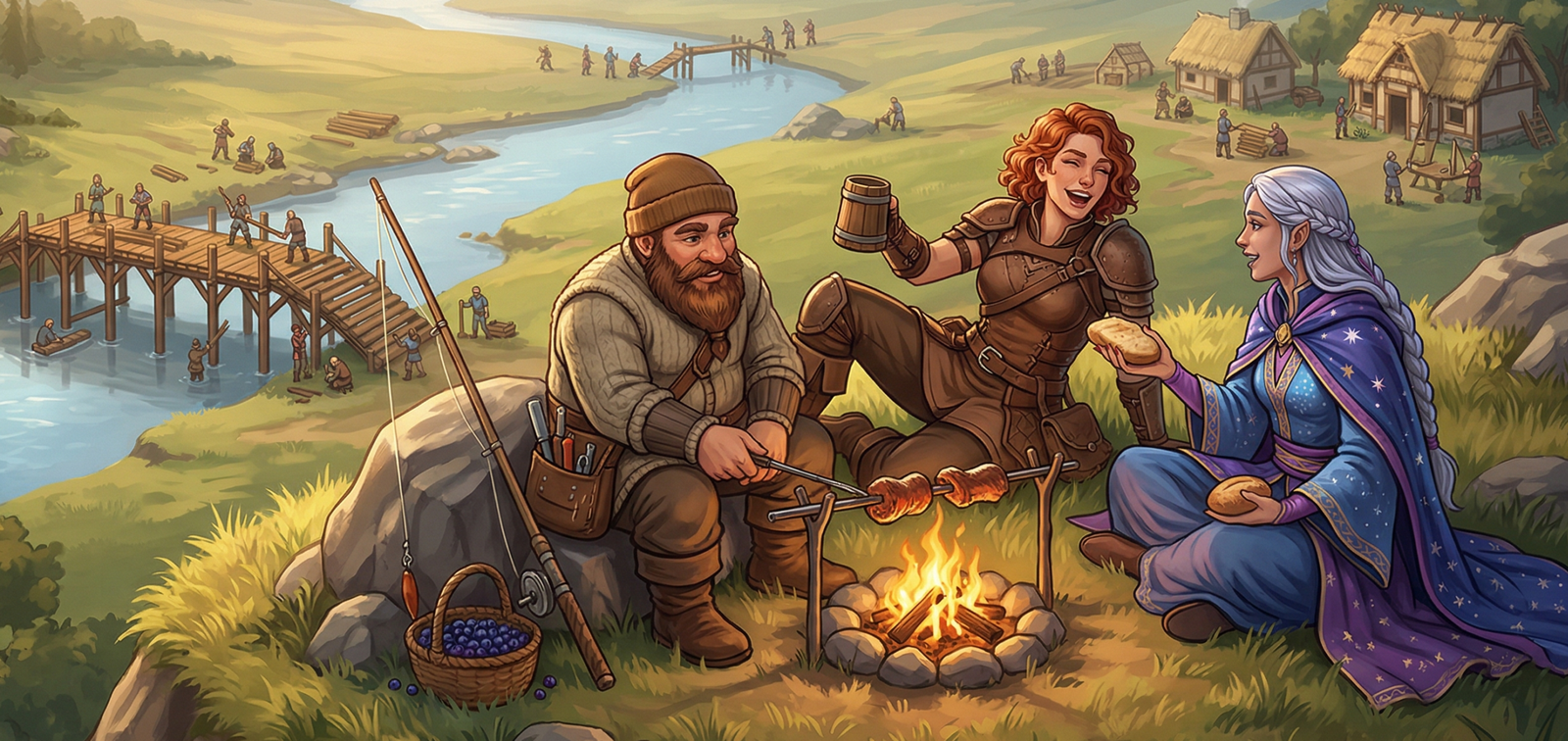

The MMO genre hit a major turning point in 2026. The old rules simply don’t work anymore. Right now, the industry is splitting. On one side, big studios are pushing massive, modern games focused entirely on a rushed, highly-monetized “Endgame.” On the other side, a massive chunk of veteran gamers are returning to Classic servers, simply begging for the old philosophy: real, paced, multiplayer worlds where the journey actually matters.
Consider this article your roadmap to the future of the MMO. We’ll explore why the exhausting 20-hour weekly grind is dying, expose the manipulative “dark patterns” infecting modern games, and highlight the new studios pivoting to a healthier, player-first design. If you are burned out by endless daily quests and just want to find a game you actually enjoy, let’s dive in.
When looking at the future of mmorpg development, developers have to look at the forgotten core of the genre: player dependency. In the early days of MMOs, you couldn’t survive alone. You needed a dedicated healer to clear a dungeon, a master crafter to make your gear, and a guild to protect you. This forced dependency wasn’t just a gameplay mechanic; it was a social engine. It forced players to talk, cooperate, and ultimately make real friends. Modern games replaced this with automated matchmaking and solo-friendly questing, stripping away the social friction that built lasting communities. Now, players are actively searching for games that force them to rely on each other again.
The Death of the 20-Hour Grind
As one player recently pointed out in a massive reddit mmorpg discussion, the core audience has grown up: “Most of us just don’t have the time to grind 20 hours a day for an item anymore.” The gamers who used to spend entire weekends raiding now juggle careers, families, and busy offline lives. Because of this, forcing players into a mandatory, endless weekly grind is a fast way to kill a game.
But it’s not just a lack of time changing the genre it’s a change in what we actually want from these digital spaces. Today, we live in crowded cities surrounded by millions of people, yet real-world social isolation is worse than ever. Gamers no longer care about mindlessly chasing the next gear upgrade in solo-friendly systems. They are logging in to find the friendships and community that modern gaming left behind.
This changes exactly what players are willing to support:
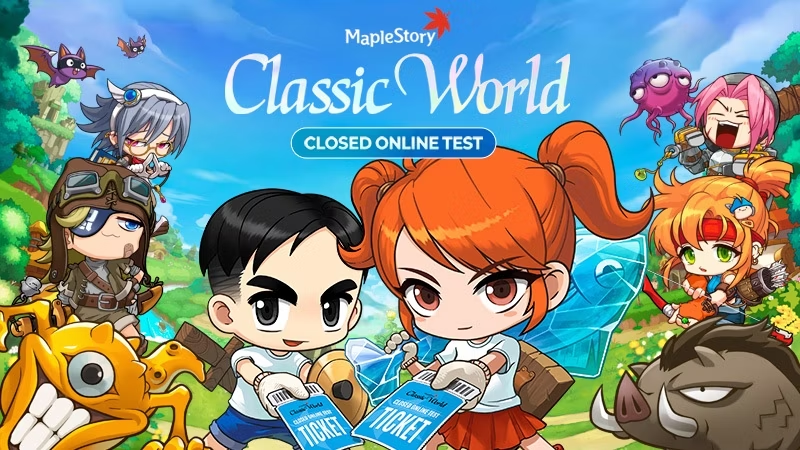
- The Return of Real Cooperation: Recent cafe testing reviews for Old School MapleStory showed a massive wave of players cheering for the return of Party Quests (PQs). Nobody misses the slow leveling; they miss the organic friendships built while waiting in line and relying on each other to clear a Kerning City PQ.
- Community as the Main Feature: Old School RuneScape stays massively popular because it has one of the tightest, most welcoming communities in gaming. The social aspect isn’t just a side activity it’s the main reason people stay.
- A Need for Flexibility: Players want meaningful character growth and social connections without being chained to their desks every single day.
Reading the Room: What the Reddit MMORPG Community is Actually Saying
If you want to know exactly where the genre is heading, just look at the daily debates dominating the reddit mmorpg community. Gamers are no longer blindly accepting whatever developers hand them. There is a massive, highly vocal backlash against greedy cash shops, daily energy limits, and FOMO tactics designed solely to force you to log in every day.
Players are completely exhausted by endless “gear treadmills” where all your hard-earned progress is completely erased the second a new patch drops. Instead, the community is flocking to games that offer “horizontal progression.” This is a system where the gear you earn today stays relevant forever.
- The Gold Standard of Time: Guild Wars 2 is constantly praised as the ultimate example of a game that respects a player’s time. Because the level cap never increases and the best gear hasn’t changed in over a decade, you can take a six-month break and jump right back in without ever feeling left behind.
- Options Over Upgrades: In horizontal systems, the endgame isn’t about grinding for a sword with slightly higher stats. It is about unlocking new ways to play, like entirely different combat classes, account-wide mounts, or new exploration abilities.
- Playing Because You Want To: When a game doesn’t threaten you with missing out on limited-time rewards, logging in feels like a genuine choice rather than a daily chore. This mental shift is exactly what modern players are demanding from all upcoming games mmo developers.
The Rise of Complex Idle MMOs: Progression Without the Punishment
For adult gamers with zero free time, the solution isn’t always giving up on the genre entirely. Sometimes, the solution is having the game play itself. Enter the “Complex Idle MMO,” a rapidly growing subgenre that bridges the gap between deep RPG systems and real-life responsibilities.
If you want a masterclass in this design, look no further than Legends of Idleon. It proves that an MMO can feature ridiculously deep crafting webs, massive worlds, and expansive skill trees without demanding your active, daily attention.
- Playing While Sleeping: In a traditional MMO, logging off means your progression instantly stops. In complex idle games, your characters continue to chop wood, mine ores, and farm bosses even while your computer is completely turned off.
- Managing an Army, Not a Hero: Instead of grinding on one character, you manage a roster of specialized classes. Your mage might be chopping magic trees while your warrior smelts iron, all feeding resources back into your shared account stash.
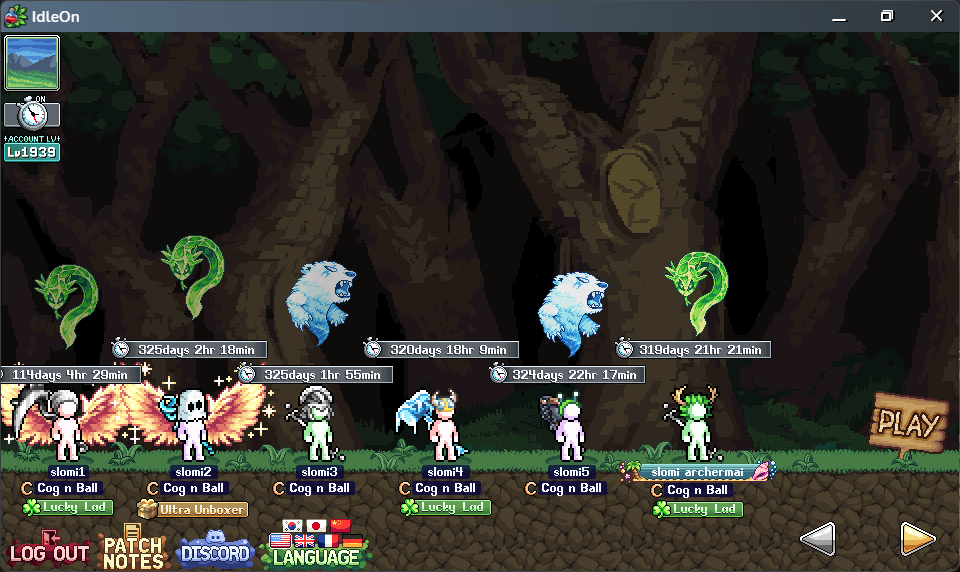
- Guilt-Free Progression: Because the game operates entirely on your personal schedule, there is zero pressure to keep up with “server firsts” or coordinate massive raids. You simply log in, optimize your characters’ tasks, and log out. And if life gets busy and you forget to log in? The progression simply keeps moving. Your characters will happily sit there farming for an entire year without you ever needing to touch them which is exactly what happened to me (see the screenshot of my account below!).
The Complexity Trap: When “Idle” Becomes a Full-Time Job
While the early game feels like sunshine and butterflies, modern idle MMOs often fall into the trap of severe system bloat. As you unlock new worlds, the mechanics become overwhelmingly complex. You are no longer just managing a basic inventory; you are suddenly balancing alchemy levels, refinery salts, 3D printing resources, and account-wide card synergies.
Eventually, just to get a little bit better or push past a progression wall, you are forced into extreme optimization. The casual experience vanishes entirely. It is quickly replaced by the mandatory need to study massive community spreadsheets just to figure out what your characters should actually be doing.
Furthermore, having an army of specialized classes sounds great in theory, but the daily management is brutal. Logging in to optimize the gear, talent trees, and daily tasks for just six characters can easily consume over three hours of your active free time. Ultimately, this massive time sink completely defeats the purpose of playing an “idle” game in the first place.
The Danger of Modern MMORPG Dark Patterns
While developers claim they are modernizing the genre to fit our busy schedules, the reality is much darker. Community analysts warn that the entire MMORPG industry has become deeply reliant on predatory systems. Because players invest thousands of hours into their characters, massive studios know they can exploit that emotional attachment through aggressive monetization and psychological manipulation.
- Pay-to-Win Convenience: This is the classic “create a problem, sell the solution” tactic, Modern MMOs intentionally design frustrating mechanics like severely limited inventory space, restrictive weight limits, or agonizingly slow travel just to sell you the cure. Games like Black Desert Online are heavily criticized for filling their cash shops with premium bag slots, weight expansions, and auto-loot pets that feel absolutely mandatory for a smooth experience.
- Gacha and Gambling Mechanics: The days of earning the absolute best items through hard work are fading. Massive AAA titles have normalized sneaking “loot boxes” into their ecosystems. Elder Scrolls Online, despite being a premium game, is notorious for its “Crown Crates,” which lock the most visually stunning, highly-coveted “Radiant Apex” mounts behind expensive, randomized gambling mechanics with abysmal drop rates.
- Artificial Time-Gating: A good game respects your time; a bad one artificially stops your progress to inflate their daily login metrics. Instead of letting you grind at your own pace, the modern MMO relies on “Dailies” and weekly lockouts. If you miss a few days of your daily reputation quests in World of Warcraft or your daily resource runs in Lost Ark, the game’s systems ensure you are permanently left behind the curve.
- The Illusion of Content: While developers promise massive, sprawling worlds, the reality is often a repetitive “theme park” treadmill. From day one to hour one-thousand, the actual gameplay rarely evolves. You aren’t learning deep new strategies; you are simply running the exact same dungeons to kill the exact same recolored enemies, just watching your damage numbers get slightly higher. Amazon’s New World serves as the ultimate cautionary tale for this exact flaw. Despite a massive launch of over 900,000 players, the community quickly realized the PvE content was painfully shallow, forcing them to run the exact same handful of quests against identical mob types endlessly. This repetitive fatigue directly led to the game’s total collapse and recently announced server shutdown.
That said, it’s worth noting that not every cash shop falls into these traps. There’s a big difference between a game selling you the fix to a problem it created on purpose and one that just lets you skip a grind you don’t feel like doing. If the free path is fair and the paid option is just faster, that’s not predatory — that’s just options. The line gets crossed when the game makes the free experience so miserable that spending money stops feeling like a choice.
Slowing Down: How Upcoming Games MMO Developers are Pivoting
The intense, mandatory 20-hour weekly grinds and predatory dark patterns that used to define the genre are no longer viable for an aging player base. Developers are finally realizing that if they want their games to succeed long-term, they must design around a player’s actual time availability. Instead of forcing high-stress treadmills, many upcoming games mmo projects are actively pivoting toward slower, highly cooperative experiences.
The ultimate example of this major design shift is Soulframe. Developed by Digital Extremes the same studio behind Warframe this new title is going in a completely different direction. Warframe is all about speed. You bullet-jump through missions, wipe entire rooms in seconds, and optimize builds to clear content as fast as possible. Soulframe slows everything down. It’s a melee-focused fantasy world built around exploration, environmental restoration, and taking your time. Same studio, completely opposite energy.
instead, Soulframe offers a slower, methodical, melee-focused fantasy experience. Early testers consistently describe the core gameplay loop as inherently relaxing and surprisingly cozy. Rather than racing to the top of a leaderboard, players focus their energy on environmental restoration, rescuing animals, and engaging in slow-paced exploration across the Isle of Midrath. It proves that a game can feature deep MMO progression systems without constantly pitting players against each other in stressful scenarios.
4 More Titles Shaping the Positive Future of MMORPG 2026
Soulframe isn’t the only studio realizing that gamers are exhausted. As we look toward the future of the MMO space, several visionary developers are actively building worlds designed to respect your time, eliminate the FOMO, and foster genuine human connection:
Light No Fire: The Pure Co-Op Adventure
Developed by Hello Games (the team that famously redeemed No Man’s Sky), this highly anticipated title drops players onto a single, massive, procedurally generated fantasy planet. There are no predatory cash shops, no mandatory daily quests, and no gear treadmills. It is entirely focused on multiplayer survival, building, and exploring an uncharted world together at your own pace.
Release Status: TBA (Currently estimated for Late 2026 / 2027)
Official Site: Here
BitCraft: Rebuilding Civilization Together
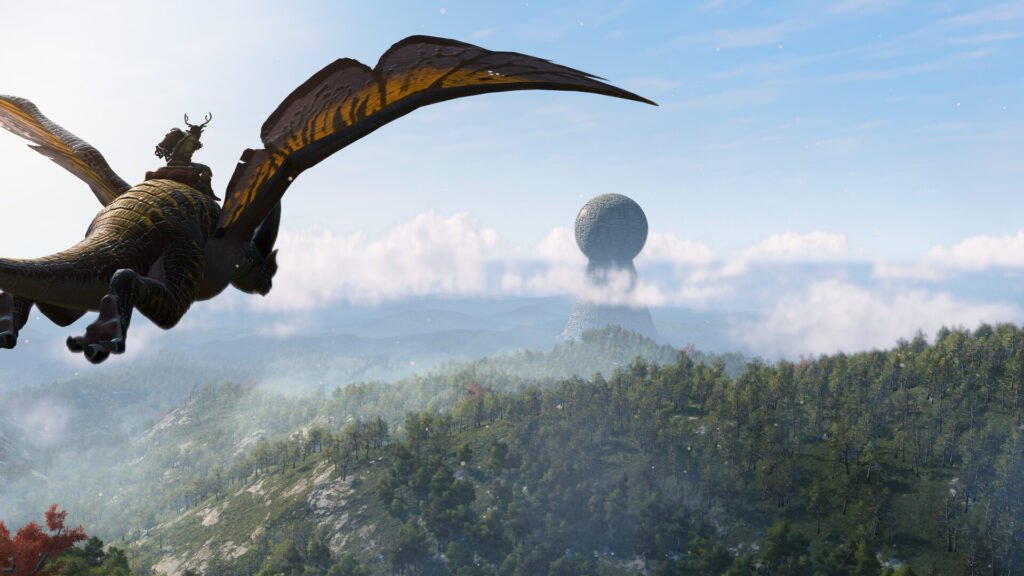
If you want the deep crafting and social dependency of an MMO without the stressful combat, BitCraft is the perfect answer. This sandbox game focuses entirely on community building, farming, forestry, and city management. You work together with other players to build massive towns from scratch. It is a deeply relaxing, highly social experience that respects your offline time.
Release Status: Early Access 2 is currently live (Launched February 26, 2026)
Official Site: Here
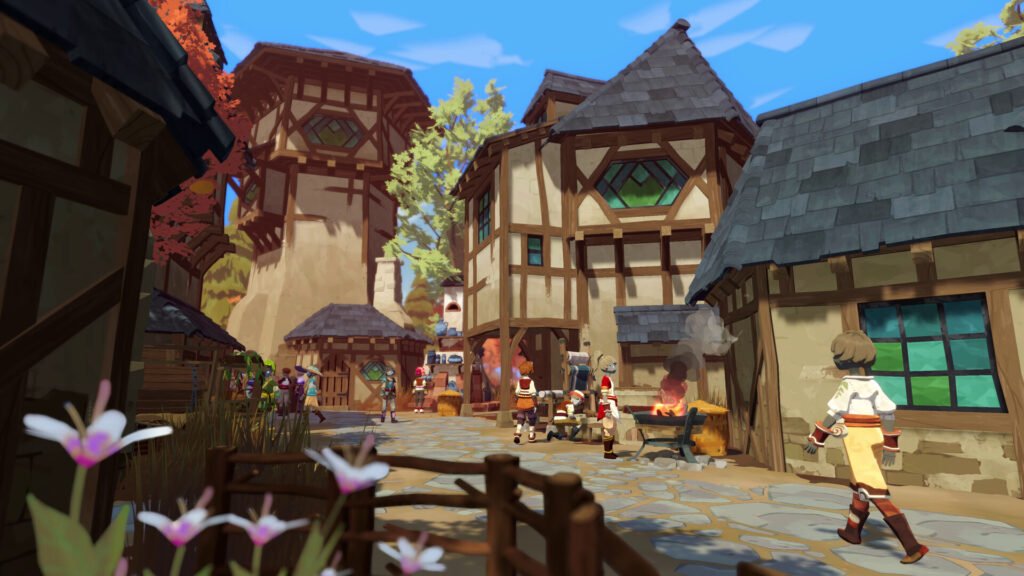
Palia: The Pioneer of the “Cozy MMO”
Palia completely removes the stress of traditional MMORPGs by throwing out aggressive combat and competitive leaderboards entirely. Instead, it plays like a massively multiplayer version of Stardew Valley or Animal Crossing. You log in to water your crops, decorate your house, fish with your friends, and engage in a completely stress-free, welcoming community.
Release Status: Fully Available to Play Now (Launched March 2024, with continuous ongoing updates)
Official Site: Here
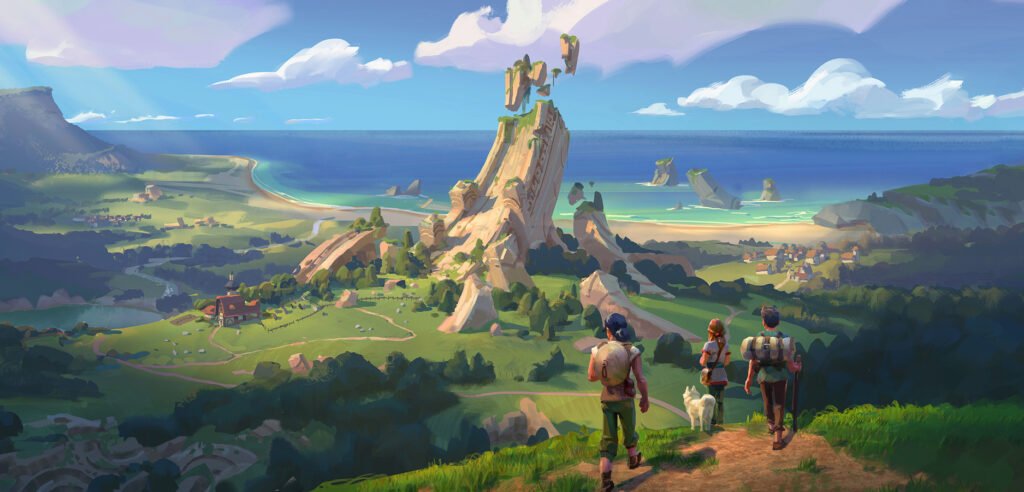
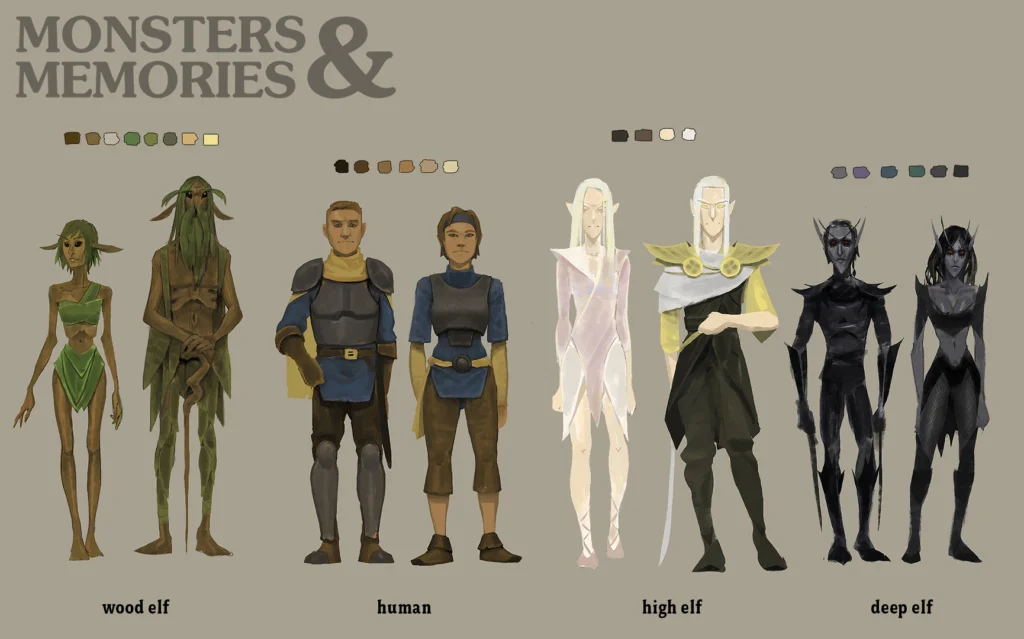
Monsters & Memories: The Slow-Paced Classic
For gamers exhausted by the blinding speed of modern “theme park” MMOs, this indie project is a love letter to the golden era of early 2000s gaming. There are no massive glowing arrows telling you where to go, and combat is slow and highly tactical. It forces players to actually sit down, talk to each other, and carefully plan out their dungeon pulls, completely eliminating the toxic “rush to the end” mentality.
Release Status: Early Access officially launching June 1, 2026
Official Site: Here
- Shaping MMORPG 2026: Simulation Over Scripting
If we want to understand the ultimate trajectory of mmorpg 2026 and beyond, we have to look at the underlying technology driving these new worlds. For the last fifteen years, we have been playing in digital theme parks. You log in, ride the “attractions” (dungeons and raids), and log out. The world itself never actually changes, the dragons you kill respawn five minutes later, and the townsfolk stand in the exact same spot repeating the same three lines of dialogue.
The next generation of MMOs is actively throwing out this static, scripted design in favor of living simulations. Developers are realizing that players want to leave a permanent mark on the world.
- Dynamic Ecosystems: Instead of static resource nodes that respawn on a fixed timer, future worlds will feature simulated ecologies. If a server over-hunts a specific forest, the deer population dwindles, forcing local predators to attack nearby player settlements for food. Classic MMOs like Wakfu pioneered this brilliantly—if players don’t actively replant seeds after hunting, entire animal species can actually go extinct in a region. Now, upcoming survival-MMOs like Light No Fire are scaling this concept up to cover entire procedurally generated planets.
- Player-Driven Economies: The days of selling legendary swords to a static NPC vendor for a handful of gold are ending. In a simulated world, localized banking, regional trade routes, and player-crafted goods become the absolute backbone of the game’s economy. Albion Online is currently the reigning king of this design; there are practically no NPC item drops. Every single weapon, piece of armor, and mount in the game’s massive economy was crafted by a real player.
- Evolving Landscapes: Games are moving toward systems where player actions physically alter the map. Whether it is cutting down a forest to build a bridge or contributing resources to upgrade a small village into a sprawling metropolis, the world should look completely different in month six than it did on launch day. Upcoming titles like BitCraft are building their entire identity around this mechanic, allowing players to permanently terraform the wilderness and construct massive, thriving cities together from scratch.
Final Thoughts: The Golden Age Isn’t Behind Us
It is incredibly easy to look at the current state of the MMORPG industry dominated by predatory cash shops, exhausting daily chores, and massive AAA failures and assume the genre is slowly dying. But the reality is exactly the opposite. The genre isn’t dying; it is finally maturing.
The developers behind the next wave of virtual worlds have heard the community loud and clear. Gamers are no longer willing to treat their hobbies like unpaid second jobs. We want to log in, feel a genuine sense of progression, and most importantly, build real connections with other human beings without the looming threat of FOMO breathing down our necks.
We don’t even have to wait for the next generation of games to see proof that this philosophy works, we just have to look at the massive, enduring success of Old School RuneScape. On paper, it seems to contradict modern design it is famously grind-heavy and features incredibly dated graphics. But OSRS thrives because it fundamentally respects your time. Even if you spend 80% of your time grinding, you never feel left out or left behind. The game is driven by an overwhelmingly positive community that actively guides the development, ensuring the mechanics stay deep and relevant today rather than relying purely on nostalgia.
Above all, it is the ultimate “drop-in, drop-out” experience. You can grind a skill for a few days, log out, stay in touch with your guild on Discord, and come back a week later to do something completely different. Because your hard work isn’t instantly erased by a new expansion patch, every single hour you invest feels permanently rewarding.
The era of the “second job” MMO is over. In its place, a new generation of relaxing, cooperative, and deeply social worlds is rising. Whether you find yourself building a town from scratch in BitCraft, exploring the massive planet of Light No Fire, or simply chatting with your clan while fishing in OSRS, one thing is certain: for the first time in a very long time, the future of the MMORPG looks incredibly bright.