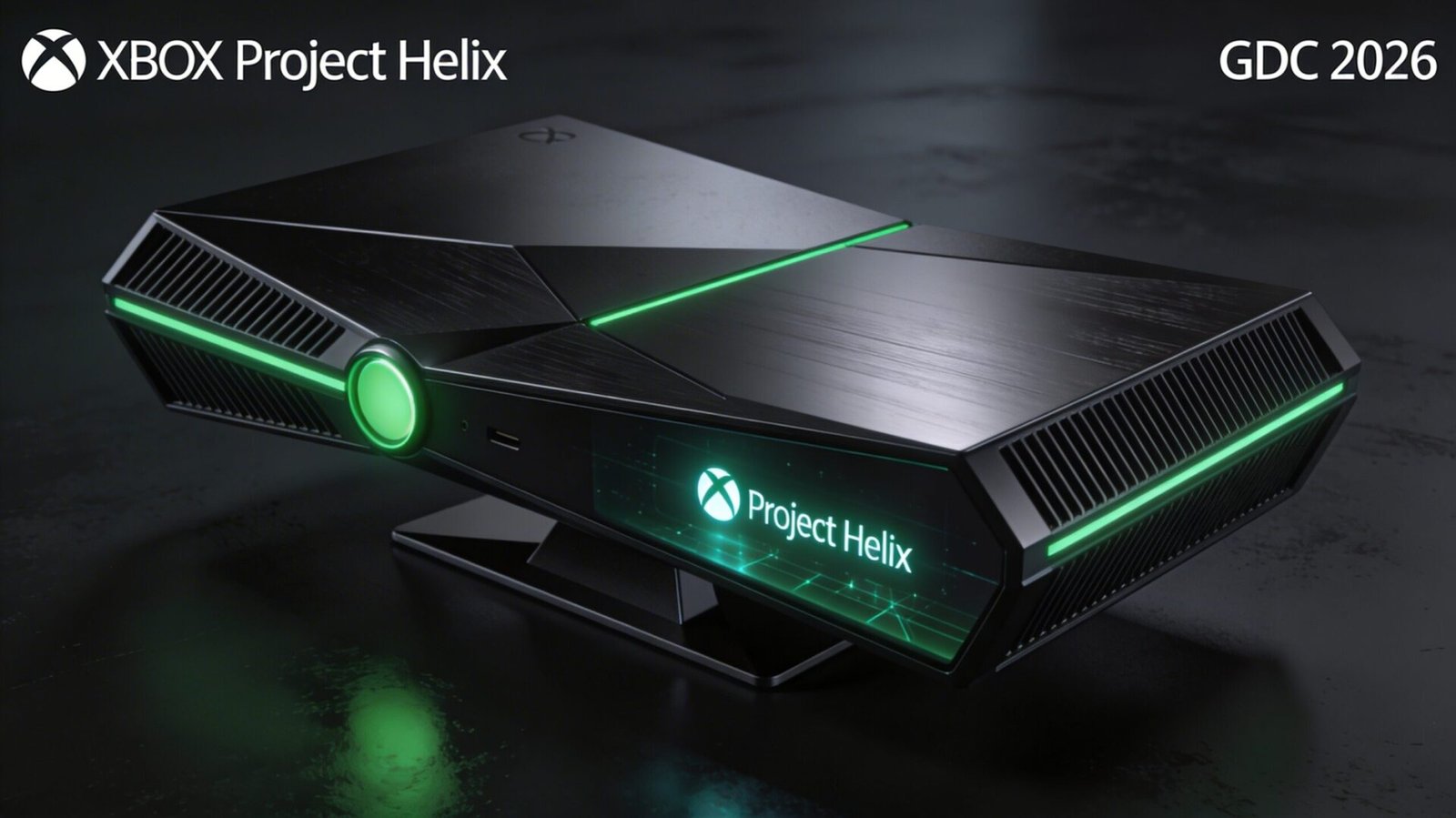

The official Xbox Project Helix specs revealed at the 2026 Game Developers Conference (GDC) represent a seismic shift in Microsoft’s hardware philosophy. Codenamed Project Helix, the device is explicitly designed as a hybrid that merges the plug-and-play nature of a traditional console with the open ecosystem of PC gaming.
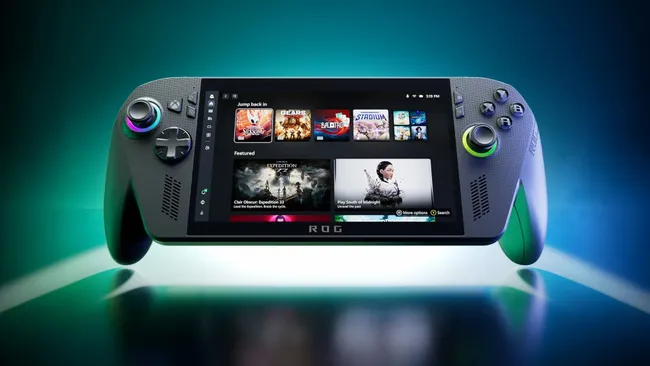
Newly appointed Xbox CEO Asha Sharma emphasized that Project Helix will natively “play your Xbox and PC games”. Honestly, we’ve heard promises about blurring the lines between PC and console for years, but with Microsoft putting their full engineering weight behind it, Project Helix actually feels like the real deal.
The Raw Silicon: Inside the Xbox Project Helix Specs
RDNA 5 and Zen 6 Integration
At the core of Project Helix is a heavily customized AMD System-on-Chip (SoC). This architecture officially utilizes AMD’s latest RDNA 5 GPU and Zen 6 CPU technologies.
Crucially, the silicon design includes a dedicated Neural Processing Unit (NPU) strictly for machine learning tasks. This confirms the hardware is purpose-built to handle advanced AI-driven rendering natively, stepping away from relying solely on raw rasterization.
GPU-Directed Work Graph Execution
One of the most significant architectural leaps confirmed at GDC 2026 is the implementation of GPU-Directed Work Graph Execution. Instead of waiting for the CPU to assign rendering tasks, the RDNA 5 GPU can generate and manage its own workloads in real time.
Why this matters for developers and players:
- Reduced CPU Bottlenecks: The CPU is freed up because the GPU handles its own workload management, significantly reducing traditional rendering bottlenecks.
- Complex Simulations: This silicon-level autonomy enables vastly larger and more complex in-game simulations without sacrificing frame rates.
FSR Diamond and the Machine Learning Leap
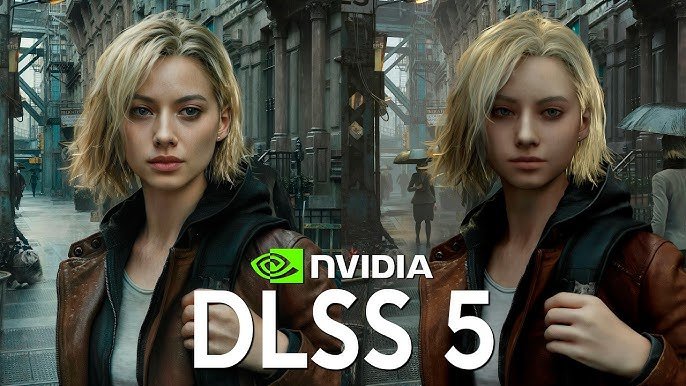
Raw compute power is only half the equation for the next generation. The Xbox Project Helix specs lean heavily on AMD’s FSR Next, officially referred to in developer resources as FSR Diamond. This suite shifts the burden of high-end graphics away from traditional rendering and onto dedicated machine learning pipelines.
Neural Rendering and the Ray Tracing Claim
FSR Diamond introduces hardware-level ML upscaling, frame generation, and ray regeneration. By utilizing the SoC’s dedicated NPU for these tasks, Microsoft is promising an “order of magnitude” leap in ray tracing performance over the Xbox Series X. While unconfirmed by Microsoft, industry leaks suggest this could translate to up to 20x faster ray tracing capabilities.
The real victory here isn’t just a cleaner interface—it’s the resource allocation. By commanding Windows 11 to actively suspend… Seeing FSR Diamond baked directly into the console hardware means console players will finally get a reliable, DLSS-equivalent performance boost natively.
Storage and Asset Streaming
To handle the massive data requirements of path-traced worlds, the Xbox Project Helix specs utilize an advanced asset streaming architecture. The console combines upgraded DirectStorage APIs with Zstandard (Zstd) deep texture compression.
What this means for performance:
- Instantaneous Streaming: DirectStorage combined with Zstd compression allows the system to unpack massive textures in real-time, completely bypassing the CPU.
- Smaller Install Sizes: By utilizing neural texture compression alongside Zstd, developers can drastically reduce the memory and storage footprint required for high-fidelity 4K and 8K assets.
The Ecosystem Shift: Xbox Mode and Unified Tools
Microsoft is aggressively blurring the lines between PC and console with a unified ecosystem approach. Starting in April 2026, Microsoft is rolling out “Xbox Mode” to Windows 11 devices in select markets. This feature transforms a standard PC into a full-screen, controller-optimized gaming environment while dynamically reducing background processes to free up system resources.
The real victory here isn’t just a cleaner interface—it’s the resource allocation. By commanding Windows 11 to actively suspend background OS bloatware, Microsoft is solving the biggest historical drawback of living-room PCs: operating system overhead eating into your frame rates.
To support this unified front, Microsoft is streamlining how games are made and preserved:
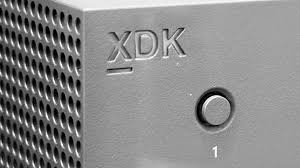
- Unified Game Development Kit (GDK): Developers can now use a single codebase and toolchain to target both Windows PCs and Project Helix. This drastically reduces porting costs and ensures feature parity across devices.
- Deep Backward Compatibility: Microsoft confirmed Project Helix will support four generations of Xbox games, spanning from the Original Xbox through the Series X/S. The system will rely on a hybrid of emulation and native ports depending on the specific title’s licensing.
Hardware Timeline: When Does Project Helix Launch?
While the core architecture is heavily defined, the consumer release is still on the horizon. Microsoft confirmed at GDC that alpha versions of the Project Helix hardware will begin shipping to developers in 2027.
Because hardware finalization, software certification, and initial game development require significant lead times, a retail consumer launch is highly unlikely before late 2027 or 2028. If you are contemplating a hardware upgrade today, your current rig or Xbox Series X will remain your primary driver for at least another two years.

The Verdict: Should You Upgrade Now or Wait for Project Helix?
With hardware specs this impressive, it is tempting to hold off on buying a new gaming PC. But here is the reality check: since Microsoft is only shipping alpha dev kits in 2027, you will not see Project Helix on store shelves until late 2027 or 2028 at the earliest.
My advice: if your current PC or console is struggling and you want to enjoy the latest releases right now, do not wait around for years—build or buy a mid-range PC today. However, if your current setup is still handling your game library comfortably without dropping frames, keep your wallet closed. The true PC-console hybrid dream is finally taking shape, and it looks like it will be entirely worth the wait.